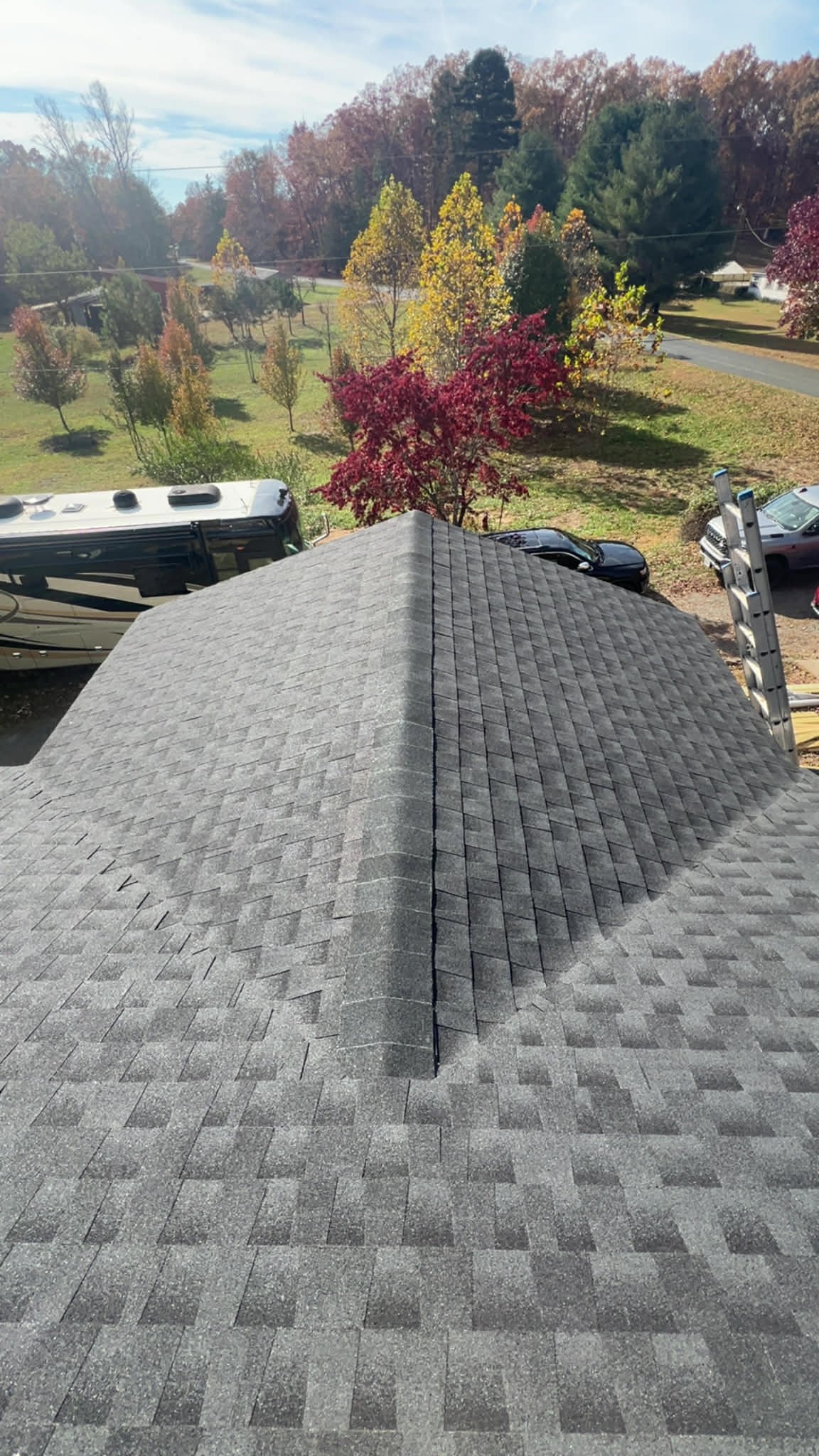
Natural slate has graced distinguished homes for centuries, offering unmatched beauty and extraordinary longevity. Today, synthetic slate alternatives promise similar aesthetics at lower cost and weight. For homeowners in Lynchburg’s historic districts and throughout Central Virginia, choosing between these options requires careful consideration of budget, building requirements, and long-term goals.
At Mapleton Roofing, we specialize in both natural slate roofing and quality synthetic alternatives. This guide provides the detailed comparison you need to make the right choice for your home.
Understanding Your Options
Natural Slate
Natural slate is a metamorphic rock quarried from the earth, split into thin tiles, and installed one piece at a time. The finest roofing slates come from quarries in Vermont, Pennsylvania, Virginia, and abroad (primarily Spain and Wales). Each tile is unique, creating the distinctive character that has topped prestigious buildings for over 400 years.
Synthetic Slate
Synthetic slate tiles are manufactured from various materials including:
- Rubber and plastic composites: Made from recycled materials
- Fiber cement: Portland cement reinforced with cellulose fibers
- Polymer composites: Engineered plastics designed for durability
- Metal: Steel or aluminum stamped to replicate slate profiles
Quality varies significantly between manufacturers and materials.
Cost Comparison
Natural Slate Costs
Natural slate represents a premium investment:
- Materials: $10-$30 per square foot depending on quarry and grade
- Installation: $15-$30 per square foot (requires specialized expertise)
- Total installed: $25-$60 per square foot
- Average 2,000 sq ft roof: $50,000-$120,000
Premium grades from Welsh or Vermont quarries cost more, while domestic standard grades fall on the lower end. The specialized installation requirements add significant labor costs.
Synthetic Slate Costs
Synthetic options provide the slate look at reduced cost:
- Materials: $4-$12 per square foot depending on quality
- Installation: $4-$8 per square foot
- Total installed: $8-$20 per square foot
- Average 2,000 sq ft roof: $16,000-$40,000
Higher-quality polymer composites cost more but offer better appearance and longevity than basic rubber or plastic options.
Weight Considerations
Weight is often the deciding factor between natural and synthetic slate, particularly for older homes.
Natural Slate Weight
Natural slate is heavy:
- Weight: 8-15 pounds per square foot installed
- Typical 2,000 sq ft roof: 16,000-30,000 pounds
- Structural requirements: Many homes require reinforcement
Older homes, particularly those in Lynchburg’s historic Garland Hill and Diamond Hill neighborhoods, may not have the structural capacity to support natural slate without significant (and costly) reinforcement.
Synthetic Slate Weight
Synthetic options dramatically reduce weight concerns:
- Weight: 1-4 pounds per square foot installed
- Typical 2,000 sq ft roof: 2,000-8,000 pounds
- Structural requirements: Usually installs on standard framing
This weight advantage makes synthetic slate ideal for existing homes that can’t support the load of natural slate, and for additions where matching existing rooflines with lighter materials makes sense.
Lifespan Comparison
Natural Slate Lifespan
Natural slate is renowned for its extraordinary longevity:
- Standard domestic slate: 75-100 years
- Premium slate (Vermont, Wales): 100-200 years
- Virginia slate: 60-125 years depending on quarry
Many slate roofs installed in the late 1800s still protect Lynchburg homes today. With quality materials and proper installation, natural slate outlasts virtually every other roofing option.
Synthetic Slate Lifespan
Synthetic materials offer good but not exceptional longevity:
- Basic rubber/plastic composites: 30-40 years
- Quality polymer composites: 40-50 years
- Premium synthetic options: 50+ years (manufacturer-dependent)
While these lifespans exceed asphalt shingles, they don’t approach natural slate’s multi-generational performance.
Installation Complexity
Natural Slate Installation
Installing natural slate requires specialized skills:
- Each tile must be individually assessed and sorted by thickness
- Precise nailing prevents cracking
- Flashing details require exceptional craftsmanship
- Repairs demand access to matching replacement tiles
- Few roofers have genuine slate installation expertise
Poor installation can result in premature failure, leaks, and broken tiles. Choosing a contractor with proven slate experience is essential.
Synthetic Slate Installation
Synthetic slate installs more like conventional roofing:
- Consistent tile dimensions simplify layout
- Lighter weight eases handling
- Many systems use standard roofing techniques
- More contractors can competently install
- Repairs are simpler with readily available materials
However, each manufacturer’s system has specific requirements, and quality installation still matters significantly.
Maintenance Requirements
Natural Slate Maintenance
Natural slate requires minimal ongoing maintenance:
- Annual visual inspection for cracked or displaced tiles
- Prompt replacement of damaged tiles to prevent water infiltration
- Flashing maintenance and occasional resealing
- Gutter cleaning to prevent backup
The challenge with natural slate maintenance is finding replacement tiles that match and qualified craftsmen to install them. This is particularly important for historic homes where visual consistency matters.
Synthetic Slate Maintenance
Synthetic slate maintenance is generally simpler:
- Annual inspection for damage or displacement
- Cleaning to remove debris and prevent algae growth
- Flashing maintenance similar to other roofing
- Replacement tiles readily available from manufacturer
Some synthetic materials may show wear or fading over time, particularly in lower-quality products.
Authenticity and Appearance
Natural Slate Aesthetics
Nothing truly matches the appearance of natural slate:
- Each tile has unique color variation and texture
- Natural weathering develops beautiful patina over decades
- Depth and dimension impossible to replicate
- Historic authenticity for period homes
- Visible from the street as genuine quality
For homes in Lynchburg’s historic districts, natural slate maintains the authentic character that defines these neighborhoods.
Synthetic Slate Aesthetics
Synthetic slate has improved dramatically:
- Better products closely mimic slate appearance
- Consistent sizing creates uniform look
- Color remains stable (no natural weathering variation)
- Some products difficult to distinguish from distance
- Up close, trained eyes can spot differences
Quality varies enormously. Premium synthetic products approach natural appearance, while budget options may look obviously artificial.
At-a-Glance Comparison Table
| Factor | Natural Slate | Synthetic Slate |
|---|---|---|
| Cost per sq ft | $15-$30 installed | $8-$12 installed |
| Weight | 8-15 lbs/sq ft | 1-4 lbs/sq ft |
| Lifespan | 100+ years | 40-50 years |
| Fire Rating | Class A (non-combustible) | Class A-C (varies) |
| Installation | Specialized expertise required | Standard roofing skills |
| Maintenance | Minimal | Low |
| Authenticity | Genuine | Simulated |
| Structural Needs | Often requires reinforcement | Standard framing |
| Historic Approval | Usually approved | Varies by district |
| Warranty | 50-75 years typical | 30-50 years typical |
Historic Home Considerations
Lynchburg’s Historic Districts
For homeowners in Garland Hill, Diamond Hill, and other Lynchburg historic districts, roofing choices involve additional considerations:
Garland Hill Historic District: This neighborhood features many late 19th and early 20th century homes, many originally built with slate roofs. The Lynchburg Architectural Review Board typically favors natural slate for visible roof replacements, though quality synthetic alternatives may be approved depending on the specific home and visibility.
Diamond Hill Historic District: Similar considerations apply to Diamond Hill’s collection of Victorian, Colonial Revival, and other period homes. Original slate roofs are part of the district’s character, and replacements should respect that heritage.
Navigating Approval: Before replacing a slate roof in any historic district, contact the local historic preservation office. Requirements vary by:
- Visibility from public streets
- Historic significance of the specific structure
- Original roofing materials
- Proposed material quality and appearance
We recommend applying for approval before selecting materials, as requirements may influence your choice.
When Synthetic Slate Works for Historic Homes
Synthetic slate may be appropriate when:
- The structure cannot support natural slate weight
- Budget constraints make natural slate impossible
- The roof is minimally visible from public areas
- A high-quality synthetic product is selected
- Historic review approves the alternative
When Natural Slate Is Essential
Natural slate is typically required or strongly recommended when:
- The home is individually listed on historic registers
- The roof is prominently visible
- Maintaining authentic materials is a condition of tax credits
- The original roof was natural slate
- Long-term preservation is the primary goal
The Bottom Line
Choosing between natural and synthetic slate involves balancing authenticity, budget, structural capacity, and long-term goals:
Natural slate is the definitive choice for homeowners who prioritize authenticity, plan multi-generational ownership, have adequate structural support, and can invest in premium materials and installation.
Synthetic slate serves homeowners well when weight limitations, budget constraints, or practical considerations make natural slate impractical, especially when quality products and professional installation ensure a respectable result.
At Mapleton Roofing, we help homeowners throughout Lynchburg and Central Virginia navigate these decisions. Whether you’re preserving a historic treasure in Garland Hill, maintaining a Diamond Hill Victorian, or simply want the elegance of slate appearance on a newer home, we deliver expert guidance and quality installation.
Contact us to discuss your slate roofing project or learn about roof replacement options for your home.
Frequently Asked Questions
Will synthetic slate be approved for my Lynchburg historic district home?
Approval varies by district, specific property, and visibility. The Architectural Review Board evaluates each application individually. We recommend consulting with the historic preservation office early in your planning process. Some high-quality synthetic products have gained approval, particularly for less-visible roof areas.
How can I tell if my existing roof is natural or synthetic slate?
Natural slate tiles vary slightly in thickness, color, and texture. They produce a distinctive ring when tapped. Synthetic tiles are more uniform and produce a duller sound. A qualified roofing professional can definitively identify your roofing material during an inspection.
Can I mix natural and synthetic slate on the same roof?
This approach is sometimes used to reduce costs while maintaining authenticity where visible. Street-facing sections may use natural slate while rear or hidden sections use synthetic. However, visual matching is challenging, and this approach may not satisfy historic district requirements. Discuss options with your contractor and review board.
My home is over 100 years old. Can it support natural slate?
Many older homes were originally designed for slate and may still have adequate structure. However, modifications, settling, and material degradation over a century require professional evaluation. We can assess your home’s structural capacity and recommend reinforcement if needed. Many historic homes in our area successfully receive new natural slate roofs after appropriate preparation.
Contact Mapleton Roofing today to schedule an assessment of your slate roofing needs or discuss roof replacement options for your historic or contemporary home.
Tags: