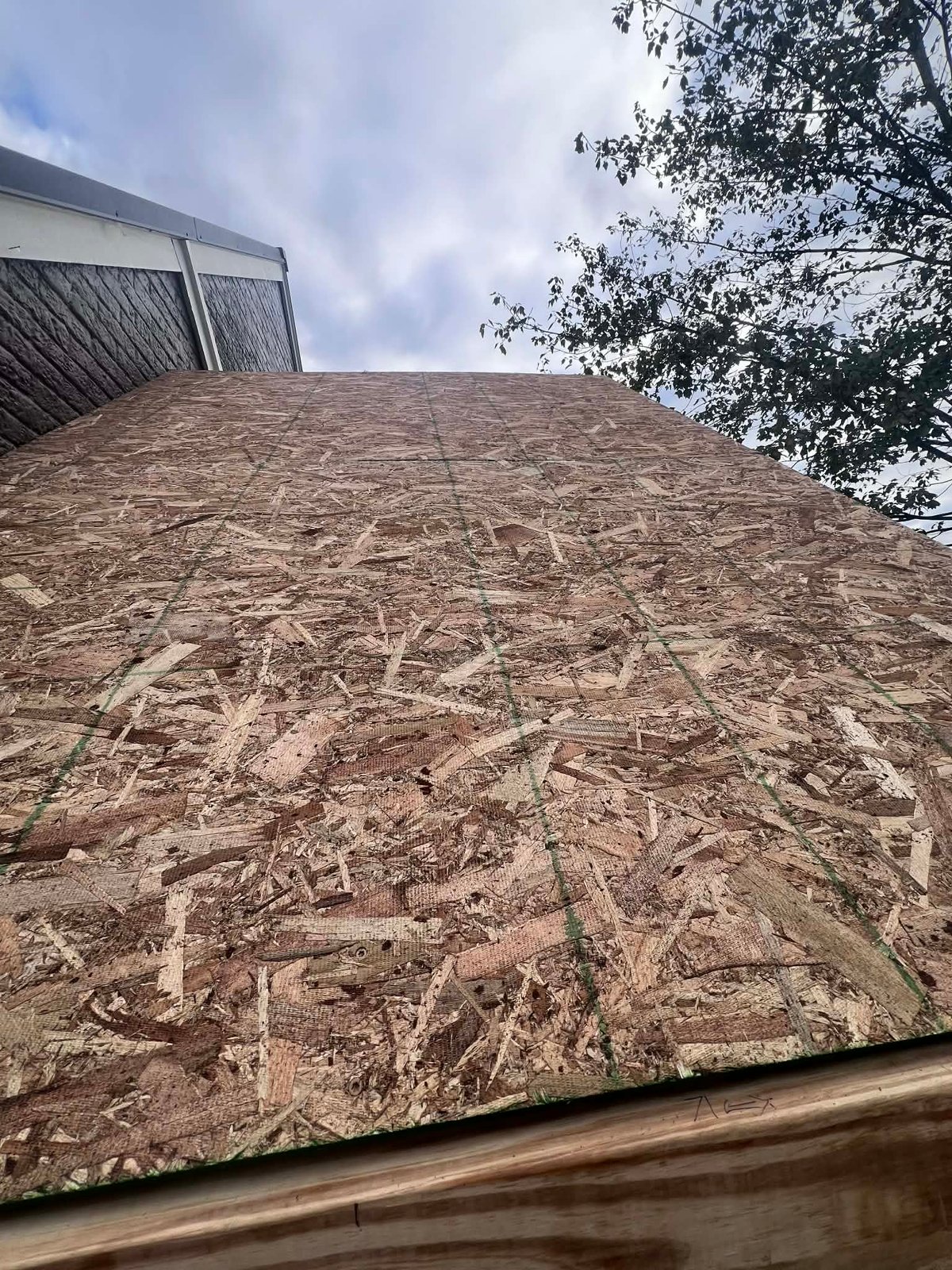
When you receive a roofing estimate, you will likely see the term roof square used to describe your roof’s size. This industry-standard measurement can be confusing if you have never encountered it before, but understanding roof squares helps you evaluate estimates, compare quotes, and understand what you are paying for.
At Mapleton Roofing, we believe informed customers make better decisions. This guide explains the roof square measurement system and shows you how to use it when planning your roofing project.
What Is a Roof Square?
A roof square is a unit of measurement equal to 100 square feet of roof area. The term comes from the industry practice of calculating roofing materials and labor based on this standardized unit rather than individual square feet.
For example:
- A 2,000 square foot roof equals 20 squares
- A 1,500 square foot roof equals 15 squares
- A 3,200 square foot roof equals 32 squares
This convention exists because roofing materials are packaged and priced based on square coverage. A bundle of shingles covers approximately one-third of a square, so three bundles equal one square of coverage. Roofing felt, underlayment, and other materials are similarly packaged in quantities that relate to squares.
Using squares simplifies ordering, estimating, and communicating about roofing projects. Rather than saying “this roof needs 75 bundles of shingles,” a roofer can say “this is a 25-square roof.” This standardization makes it easier to compare estimates and understand pricing across different companies.
How Roofers Calculate Roof Squares
Professional roofers use several methods to accurately measure roof area:
Physical Measurement
The most accurate method involves physically measuring the roof:
- Measure each roof plane: A simple gable roof has two rectangular planes; more complex roofs have many planes with various shapes
- Calculate area of each plane: Length times width for rectangles; appropriate formulas for triangles, trapezoids, and other shapes
- Add all plane areas together: This gives total roof area in square feet
- Divide by 100: Convert square feet to squares
For safety reasons, physical roof measurement should only be done by trained professionals with proper safety equipment. Walking on roofs, particularly steep or damaged ones, presents significant fall risks.
Aerial Measurement Technology
Modern roofing companies increasingly use satellite imagery and specialized software to measure roofs without climbing on them:
- High-resolution satellite photos provide accurate measurements
- Software calculates area, pitch, and complexity automatically
- Measurements can be taken for any accessible property
- Results are comparable in accuracy to physical measurement
- No safety risks or need to access the property initially
This technology allows roofers to provide preliminary estimates before ever visiting your home, streamlining the quoting process.
Blueprint Calculation
For new construction or when plans are available:
- Calculate footprint area: The roof’s horizontal coverage (house width times length for simple shapes)
- Apply pitch factor: Multiply by a factor that accounts for the roof’s slope (steeper roofs have more surface area than flat roofs over the same footprint)
- Add for overhangs: Include eaves, rakes, and any portions extending beyond the building footprint
The pitch factor accounts for the geometry of angled surfaces. A 12:12 pitch (45-degree angle) has approximately 41% more surface area than a flat roof over the same footprint, while a 4:12 pitch adds about 5%.
Understanding Your Estimate
When you receive a roofing estimate based on squares, here is how to interpret it:
Cost Per Square
Many estimates show cost per square for materials, labor, or total price. This allows you to compare quotes even if the companies measured slightly differently:
- Materials per square: Typically $100 to $400+ depending on material type
- Labor per square: Varies based on pitch, complexity, and region
- Total per square: Complete installed price including materials, labor, and overhead
For example, if Company A quotes $350 per square for 20 squares ($7,000 total) and Company B quotes $380 per square for 19 squares ($7,220 total), the per-square comparison shows Company A is more economical despite the total being lower.
Additional Line Items
Not everything fits neatly into per-square pricing. Look for these additional items:
- Tear-off: Removing existing roofing, often priced per square or layer
- Decking replacement: Rotted or damaged wood, priced per sheet or square foot
- Flashing: New or replacement flashing at penetrations and transitions
- Ventilation: Ridge vents, soffit vents, or other ventilation components
- Drip edge: Metal edging around the roof perimeter
- Permits: Local building permit fees
- Dumpster: Waste removal for tear-off debris
These items add to the per-square cost and explain why total prices vary between companies even when their per-square rates are similar.
Complexity Factors
Not all squares are created equal. Estimates may reflect additional costs for:
- Steep pitch: Roofs steeper than 6:12 or 8:12 require more time and safety measures
- Multiple roof planes: Complex roofs with many intersections require more cutting and flashing
- Dormers and skylights: Each penetration adds complexity and materials
- Access difficulties: Limited equipment access, long carries, or multi-story heights
- Architectural details: Turrets, curved sections, or other unusual features
A 20-square simple gable roof will cost less than a 20-square complex roof with the same materials because labor and waste are reduced on simpler designs.
Average Home Sizes in Squares
Understanding typical roof sizes helps you evaluate whether your measurement seems reasonable:
Small homes (1,000-1,500 sq ft living space): Typically 12-18 roof squares, depending on roof style and overhangs.
Average homes (1,500-2,500 sq ft living space): Typically 18-30 roof squares. Most homes in Lynchburg and Central Virginia fall into this range.
Large homes (2,500-4,000 sq ft living space): Typically 30-50 roof squares. These often have complex rooflines that add to the square count.
Very large homes (4,000+ sq ft living space): 50 squares or more. Estate properties and large homes may have 60, 80, or even 100+ squares.
Note that roof square count does not directly correlate to living space:
- A two-story home has less roof than a one-story home of equal living space
- Steep roofs have more squares than low-slope roofs over the same footprint
- Complex rooflines add squares compared to simple designs
- Large overhangs, covered porches, and attached garages add to roof area
How to Estimate Your Roof Size
While professional measurement provides the most accurate results, you can estimate your roof size for budgeting purposes:
Method 1: Footprint Plus Pitch Factor
-
Estimate your home’s footprint: For simple shapes, measure or estimate the exterior dimensions of your house, including garage if attached. Multiply length by width.
-
Add for overhangs: Typical overhangs are 12-18 inches on all sides. Add approximately 15% to your footprint to account for this.
-
Apply pitch factor: Multiply by the appropriate factor:
- 4:12 pitch: 1.05
- 6:12 pitch: 1.12
- 8:12 pitch: 1.20
- 10:12 pitch: 1.30
- 12:12 pitch: 1.41
-
Divide by 100: Convert to squares.
Example: A 40 x 50 foot home (2,000 sq ft footprint) with overhangs adds 15% (2,300 sq ft), times 1.12 pitch factor for 6:12 pitch equals 2,576 sq ft, or about 26 squares.
Method 2: Aerial Photo Estimation
- Find your home on Google Maps or similar service
- Switch to satellite view and zoom in
- Use the measure tool (if available) to outline your roof
- The tool will show area in square feet; divide by 100
This method works well for simple roof shapes but may undercount complex roofs with multiple elevations.
Method 3: Material Delivery Method
If you know how much material was used on a previous roofing job:
- Count shingle bundles: 3 bundles typically equals 1 square
- Each roll of standard felt covers approximately 4 squares
- Use this as a baseline for your current estimate
Why Accurate Measurement Matters
Precise roof measurement affects your project in several ways:
Accurate Pricing
Underestimating creates problems when the job runs over budget. Overestimating leads to confusion when the final price differs from the estimate. Accurate measurement provides reliable pricing you can plan around.
Proper Material Ordering
Too few materials delays the project waiting for additional orders. Too many materials result in waste or return fees. Correct measurement ensures efficient material use.
Project Planning
Knowing the true scope helps schedule appropriate crew sizes, equipment, and completion timeframes. A 40-square roof requires different resources than a 20-square roof.
Comparing Quotes
When multiple contractors measure within reasonable agreement (within 5-10%), you can confidently compare their per-square pricing. Significant measurement discrepancies suggest someone may have made an error.
Getting a Professional Measurement
For the most accurate results, we recommend professional measurement. At Mapleton Roofing, our measurement process includes:
- Detailed assessment of all roof planes and features
- Pitch measurement for accurate area calculation
- Documentation of complexity factors affecting price
- Identification of any visible damage or concerns
- Clear explanation of measurements and what they mean for your project
This thorough approach ensures our estimates accurately reflect what your project requires.
Frequently Asked Questions
Why do roofers use squares instead of square feet?
The square system developed because roofing materials come in packages that cover 100 square feet or fractions thereof. Three bundles of standard shingles cover one square. Underlayment rolls cover a specific number of squares. Using squares makes ordering, estimating, and communication more efficient across the industry. It is easier to work with smaller numbers (25 squares versus 2,500 square feet) and matches how materials are packaged.
How do I convert my roof estimate to cost per square foot?
Divide the total cost by the number of squares, then divide by 100. For example, a $10,000 estimate for a 25-square roof equals $400 per square, or $4.00 per square foot. This can help you compare roofing costs to other home improvement projects typically priced per square foot.
Can I measure my roof myself to verify an estimate?
You can make rough estimates using the methods described above, but precise measurement requires professional skills and safety equipment. If you are concerned about an estimate’s accuracy, the best approach is to get measurements from multiple reputable contractors. Their measurements should agree within 5-10%. Significant disagreement suggests someone made an error that should be clarified before proceeding.
Understand Your Investment
Understanding roof squares helps you make sense of roofing estimates and ensures you know what you are paying for. While the measurement system may seem unusual at first, it provides a standardized way to discuss roof size that makes comparing quotes and planning projects more straightforward.
At Mapleton Roofing, we provide detailed, transparent estimates that clearly explain your roof’s size and what drives the total cost. We serve homeowners throughout Lynchburg, Bedford, Amherst, Campbell County, and all of Central Virginia with expert roofing services.
Ready for an accurate measurement and fair estimate for your roofing project? Contact us today to schedule a free roof inspection and consultation. We will explain exactly what your roof needs and what it will cost, with no surprises and no hidden fees.
Tags: