When homeowners think about roof health, they typically consider shingles, flashing, and gutters. But one of the most critical components of a properly functioning roof system is completely invisible from the ground: ventilation. Proper roof ventilation keeps your attic at the right temperature and humidity level, directly affecting your roof’s lifespan, your energy bills, and your home’s comfort.
At Mapleton Roofing, we have seen the consequences of poor ventilation throughout the Lynchburg area: roofs that age prematurely, ice dams that cause water damage, and attics that bake in summer and create mold in winter. Understanding how ventilation works empowers you to maintain your roof and recognize when problems need professional attention.
What Is Roof Ventilation?
Roof ventilation is a system that allows air to flow through your attic space, creating a path for fresh outside air to enter and stale, moisture-laden air to exit. This continuous airflow serves multiple critical purposes:
- Removes heat that accumulates in the attic
- Eliminates moisture before it can cause damage
- Equalizes temperature between the attic and outside air
- Prevents condensation on roof components
- Reduces the workload on your HVAC system
A properly ventilated attic is not sealed or climate-controlled. Instead, it maintains conditions similar to the outside air while keeping the living space below comfortable and the roof structure dry.
The key principle behind effective ventilation is balance. Air must have both a way to enter the attic (intake ventilation) and a way to exit (exhaust ventilation). Without this balance, airflow stagnates and problems develop.
Types of Roof Ventilation
Different homes and roof designs call for different ventilation approaches. Here are the main types you will encounter:
Intake Ventilation
Intake vents allow fresh air to enter the attic, typically at the lowest point of the roof system.
Soffit Vents: The most common intake option, soffit vents are installed in the underside of the roof overhang. They can be continuous strips or individual vents spaced along the soffit. Soffit vents work with natural convection, as cool air enters low and rises as it warms.
Drip Edge Vents: For homes without soffits or with inadequate soffit space, drip edge vents provide intake ventilation at the roof’s edge.
Fascia Vents: Similar to drip edge vents, fascia vents mount on the fascia board to provide air intake where soffit vents are not possible.
Exhaust Ventilation
Exhaust vents allow hot, moist air to escape from the attic, typically at or near the roof’s peak.
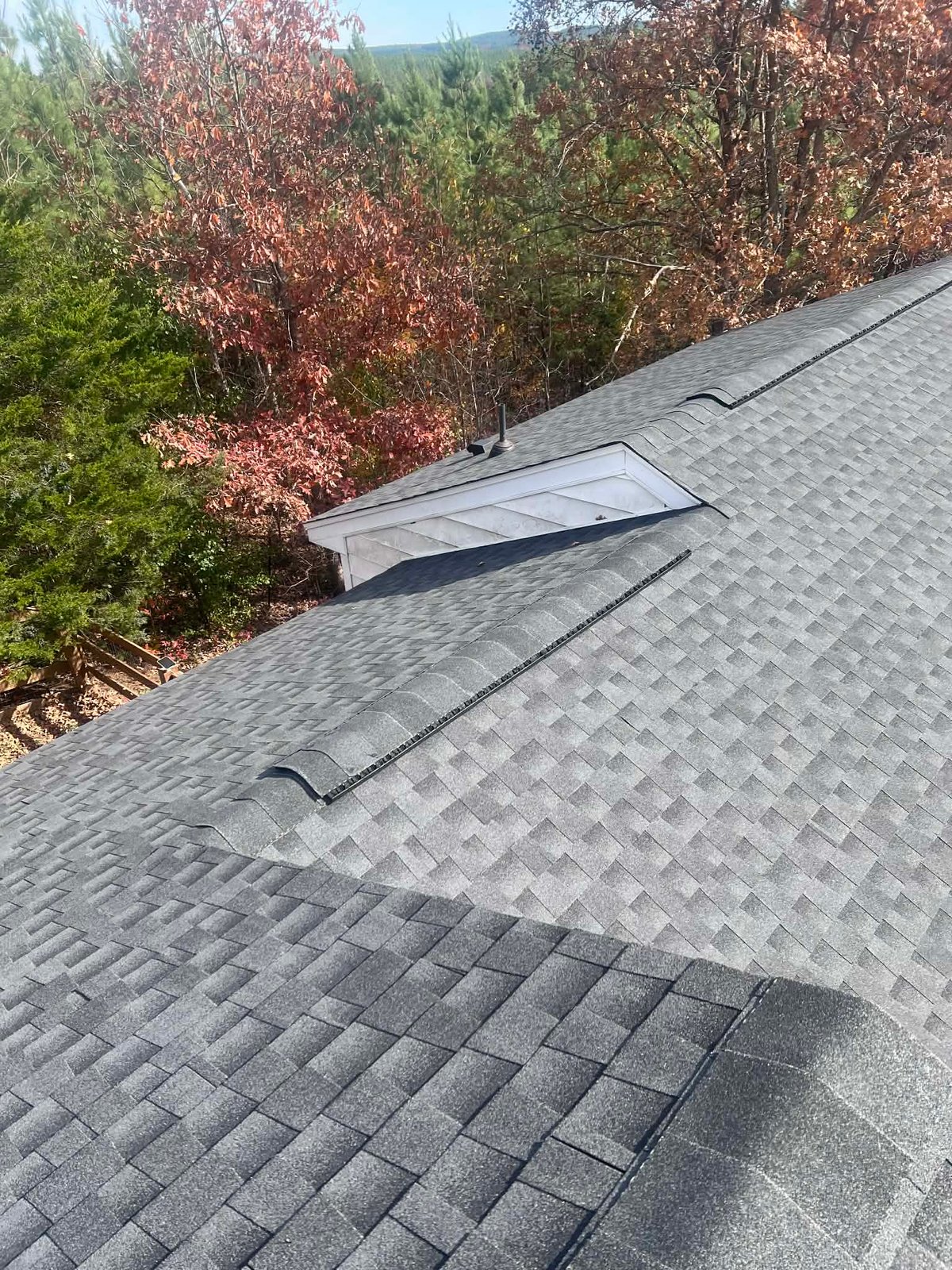
Ridge Vents: Installed along the entire peak of the roof, ridge vents provide continuous exhaust ventilation. They are covered by ridge cap shingles, making them nearly invisible. Ridge vents are highly effective because hot air naturally rises to the highest point.
Box Vents (Louver Vents): These static vents are individual units installed near the roof peak. They rely on natural convection and wind to move air. Multiple box vents may be needed depending on attic size.
Gable Vents: Mounted in the gable ends of the house (the triangular wall sections), gable vents allow cross-ventilation when wind blows. They work best in pairs on opposite gable ends but are less effective than ridge and soffit systems.
Turbine Vents (Whirlybirds): These spinning vents use wind power to actively pull air from the attic. They are more effective than static vents in windy conditions but less effective in still air.
Powered Attic Ventilators: Electric or solar-powered fans actively exhaust hot air from the attic. While they move a lot of air, they can create negative pressure that pulls conditioned air from your living space if the attic is not properly sealed from below.
Roof Louvers: Similar to box vents, these are installed on the roof slope and provide passive exhaust ventilation.
Our roof ventilation services can assess your current system and recommend improvements tailored to your home’s design and needs.
Why Roof Ventilation Matters
Proper ventilation affects your home in multiple ways, making it one of the best investments you can make in your roof system.
Extends Roof Life
Heat is the enemy of roofing materials. In an unventilated attic during a Lynchburg summer, temperatures can exceed 150 degrees Fahrenheit. This extreme heat radiates through the roof deck, baking shingles from below while the sun bakes them from above.
This double heat exposure accelerates shingle deterioration, causing them to:
- Lose protective granules faster
- Become brittle and crack
- Curl at the edges
- Fail years before their expected lifespan
Proper ventilation reduces attic temperatures dramatically, allowing your roof to reach its full service life.
Prevents Moisture Damage
Moisture from your living space constantly migrates upward through ceilings, even with vapor barriers in place. Cooking, bathing, laundry, and simply breathing add gallons of water vapor to your home’s air daily.
When this moisture-laden air reaches a cold attic in winter, it condenses on roof sheathing, rafters, and insulation. Over time, this condensation leads to:
- Rotted roof decking requiring expensive replacement
- Mold growth that affects air quality and health
- Damaged insulation that loses R-value
- Rust on metal components
- Stained ceilings from moisture working through
Adequate ventilation carries this moisture away before it can condense and cause problems.
Reduces Energy Costs
An overheated attic does not just affect your roof; it affects your comfort and energy bills. Heat radiating from a superheated attic into your living space makes your air conditioning work harder and longer.
Studies show that proper attic ventilation can reduce cooling costs by up to 10-15 percent in hot climates. Combined with adequate attic insulation, ventilation creates an efficient thermal boundary that keeps your home comfortable year-round.
Prevents Ice Dams
Ice dams form when heat escaping into the attic warms the roof deck, melting snow from below. The meltwater runs down to the cold eaves, where it refreezes and creates a dam. Water backing up behind this dam can work under shingles and into your home.
Proper ventilation keeps the entire roof deck at a consistent temperature close to the outside air, preventing the uneven melting that causes ice dams.
Signs of Poor Roof Ventilation
Watch for these warning signs that your attic ventilation may be inadequate:
In summer:
- Upper floors significantly hotter than lower floors
- Air conditioning running constantly
- High electricity bills during cooling season
- Shingles that appear wavy or distorted
- Excessive heat radiating from ceilings
In winter:
- Ice dams forming at eaves
- Icicles hanging from gutters
- Frost or condensation visible in attic
- Musty odors from attic space
- Moisture stains on ceilings
Year-round:
- Mold or mildew in attic
- Peeling exterior paint near roofline
- Rusted nails or metal components in attic
- Damp or compressed insulation
- Visible daylight through roof boards (indicating rot)
If you notice any of these signs, a professional inspection can identify the cause and recommend solutions. Our team provides thorough roof inspections throughout Central Virginia.
Lynchburg Humidity and Your Ventilation Needs
The Lynchburg area’s climate presents specific ventilation challenges that homeowners should understand.
High summer humidity: Central Virginia’s humid summers mean that even outside air carries significant moisture. Ventilation systems must move enough air volume to prevent humidity from accumulating in the attic, not just rely on dry outside air.
Temperature swings: Our region experiences significant temperature variations between day and night and between seasons. These swings stress roofing materials and make consistent ventilation even more important.
Storm patterns: Summer thunderstorms and occasional tropical moisture bring intense rain that can test roof systems. Proper ventilation helps dry any moisture that penetrates during these events.
Winter moisture concerns: While our winters are moderate compared to northern states, we do experience freezing temperatures. The combination of indoor heating and cold outdoor temperatures creates condensation risk in poorly ventilated attics.
For these reasons, we often recommend slightly exceeding minimum ventilation requirements for homes in the Lynchburg area. The additional airflow provides a margin of safety for our variable climate.
How Much Ventilation Do You Need?
Building codes and industry standards provide guidelines for minimum ventilation requirements. The most common standard is the 1:150 rule, which specifies 1 square foot of net free ventilation area for every 150 square feet of attic floor space.
This can be reduced to 1:300 (half as much ventilation) if:
- A vapor barrier is installed on the warm side of the ceiling
- The ventilation is balanced between high (exhaust) and low (intake) vents
For example, a 1,500 square foot attic would need:
- At 1:150: 10 square feet of ventilation (5 intake, 5 exhaust)
- At 1:300: 5 square feet of ventilation (2.5 intake, 2.5 exhaust)
Remember that net free area accounts for screens and louvers that reduce actual airflow, so the gross vent opening must be larger.
The balance between intake and exhaust is critical. Ideally, you want slightly more intake than exhaust to create positive pressure in the attic. A common recommendation is 60% intake and 40% exhaust.
Improving Your Roof Ventilation
If your current ventilation is inadequate, several options can improve airflow:
Add soffit vents: Many older homes have no soffit ventilation or vents that have been blocked by insulation. Adding or clearing soffit vents is often the most cost-effective improvement.
Install a ridge vent: If your home has individual exhaust vents, upgrading to a continuous ridge vent provides more uniform exhaust across the entire roof.
Add attic baffles: These foam or plastic channels ensure that insulation does not block airflow from soffit vents into the attic space.
Clear obstructions: Sometimes poor ventilation is simply due to blocked vents. Debris, paint, insulation, or animal nests can all restrict airflow.
Seal air leaks from below: Before adding more ventilation, ensure that air leaks between your living space and attic are sealed. This reduces moisture migration and improves energy efficiency.
Ventilation improvements should always be designed for your specific roof. Our roof ventilation services include assessment, design, and professional installation.
Frequently Asked Questions
Can a roof have too much ventilation?
In theory, yes, but in practice, having too much ventilation is rare. The more common problem is insufficient ventilation or an imbalance between intake and exhaust. The main concern with excessive exhaust ventilation is creating negative pressure that can draw conditioned air from your living space or allow weather infiltration during storms.
Do I need roof ventilation if my attic is finished?
Finished attics present unique challenges. The insulation and vapor barrier are typically at the roof line rather than the attic floor, which changes ventilation requirements. These spaces often need special ventilation strategies like insulated roof panels with integrated air channels or other solutions. Consult with a professional before finishing an attic.
How do I know if my soffit vents are blocked?
You can check soffit vents from inside the attic on a sunny day. Look toward the eaves; you should see daylight coming through the soffit vents. If you see insulation blocking the light, baffles need to be installed. From outside, look at the soffit vents for visible blockages, paint over-spray, or damage. You should be able to feel air movement at the vents on a warm day.
Breathe Easy with Proper Ventilation
Roof ventilation may be invisible, but its effects on your home’s comfort, energy efficiency, and roof longevity are substantial. Proper airflow is an investment that pays dividends for decades.
Whether you are concerned about your current ventilation, planning a roof replacement, or just want to understand your home better, Mapleton Roofing is here to help. We serve homeowners throughout Lynchburg, Bedford, Amherst, and all of Central Virginia with expert ventilation assessment, design, and installation services.
Contact us today to schedule a ventilation evaluation and ensure your roof can breathe easy through every Virginia season.
Tags: